

 7-Aug-26 4 min. read
How Much Does RV Transport Cost?
RV transport cost ranges from $1.50 to $4 per mile in 2026. Compare RV types, tow-away, drive-away and flatbed rates, distance, equipment, and fees.
Read our cost guide Proudly American

RV transport cost usually ranges from about $1.50 to $4.00 per mile in 2026, with many domestic shipments totaling $1,000 to $5,000 or more. A 1,000-mile move can therefore cost roughly $1,500 to $4,000 depending on the RV and transport method.
Larger motorhomes cost more because they need additional carrier capacity. Tow-away service can cost less for road-ready trailers. Flatbed hauling raises the price because the entire RV rides on specialized equipment.
Distance changes the total bill significantly. Yet longer moves often cost less for each mile. Understanding the transport method before comparing estimates can prevent a difference of several thousand dollars.
The average RV transport cost is best estimated at $1.50 to $4.00 per mile in 2026. Smaller towable units often sit near the lower end. Large motorhomes can reach the upper end because their weight and dimensions require more equipment or route planning.
CitizenShipper places typical RV shipping rates between $1.00 and $3.00 per mile. Its 2026 guide estimates a 1,000-mile shipment at roughly $1,000 to $3,000 depending on RV type.
A-1 Auto Transport publishes a broader range of $1.50 to $4.00 per mile. It states that many shipments total $1,000 to $5,000 or more.
These ranges produce the following planning figures:
| Distance | Lower planning estimate | Higher planning estimate |
|---|---|---|
| 250 miles | $375 | $1,000 |
| 500 miles | $750 | $2,000 |
| 1,000 miles | $1,500 | $4,000 |
| 1,500 miles | $2,250 | $6,000 |
| 2,000 miles | $3,000 | $8,000 |
The table uses the current $1.50 to $4.00 broad rate. It does not mean every shipment will fall inside each figure.
A lightweight travel trailer can cost less than a Class A motorhome for the same distance. The equipment requirement creates much of that difference.
The insider tip is to compare the rate per mile after receiving each estimate. Two totals that look very different can make sense when they involve different RV classes.
RV type changes the price because size affects trailer capacity and fuel use. Small travel trailers can cost around $1.50 to $2.50 per mile. Large Class A units can reach $3.00 to $5.00 per mile when specialized equipment is required.
Here is a practical 2026 comparison:
| RV type | Typical method | Published planning rate |
|---|---|---|
| Pop-up camper | Tow-away | $1.50 to $2.50 per mile |
| Mid-size travel trailer | Tow-away or flatbed | $2.00 to $3.00 per mile |
| Class B or Class C | Drive-away or flatbed | $1.75 to $2.75 per mile |
| Class A under 40 feet | Drive-away or flatbed | $2.00 to $3.50 per mile |
| Large oversize Class A | Specialized trailer | $3.00 to $5.00 per mile |
These figures come from published carrier guidance and should be treated as planning ranges rather than fixed tariffs.
A pop-up camper is lighter than most motorhomes. It can also fit standard towing equipment more easily.
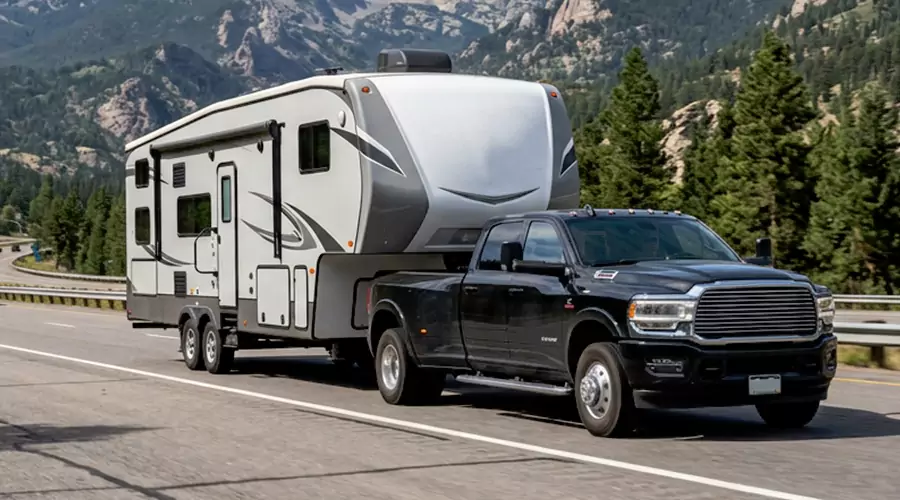
A fifth wheel needs an appropriate tow vehicle and hitch. A large motorhome can require an entirely different transport setup.
Current motorhome shipping costs therefore cannot be estimated from mileage alone. The RV’s actual dimensions need to be known before the final rate makes sense.
The counterintuitive point is that an expensive RV does not automatically cost more to ship. Physical size matters more than purchase price.
Distance raises the final payment while the cost per mile usually falls. Short trips carry a higher mileage rate because dispatch work remains similar. Longer trips spread those fixed expenses across more highway miles even though the total transportation charge becomes larger.
A short regional trip can reach $2.00 to $4.00 per mile. Long-distance moves can move closer to $1.00 to $1.50 per mile for some RV types.
This pricing pattern matters when reviewing RV shipping cost per mile.
For example, a 300-mile move at $3 per mile costs $900. A 1,500-mile shipment at $1.75 per mile costs $2,625.
The longer trip costs much more overall. Yet the mileage rate is lower.
Current RV transport cost per mile calculations should use highway mileage rather than straight-line distance. Transport equipment must follow legal truck routes.
Route restrictions can also add mileage. A large motorhome may not fit under every bridge or along every road that a passenger vehicle could use.
One useful tip is to ask what mileage the estimate uses. A quote calculated on 1,600 truck-route miles should not be compared with another based on 1,450 map miles.
Tow-away transport often costs the least for a road-ready travel trailer because the RV remains on its own wheels. Drive-away can reduce equipment expense for an operable motorhome. Flatbed hauling usually costs more because the entire RV must fit on commercial transport equipment.
Tow-away service connects a travel trailer or fifth wheel to a suitable towing vehicle.
The RV stays on its own tires throughout the move. This reduces the amount of carrier equipment needed.
A properly maintained towable can often use this method without being loaded onto another trailer.
Tires and wheel bearings must be roadworthy. Brake components also need to function correctly before a long trip.
Drive-away service places a qualified driver behind the wheel of an operable motorhome.
The motorhome moves under its own power. This method avoids loading the full vehicle onto another trailer.
The main trade-off is added mileage. The trip also adds engine hours.
Drive-away may make financial sense for a road-ready Class B or Class C.
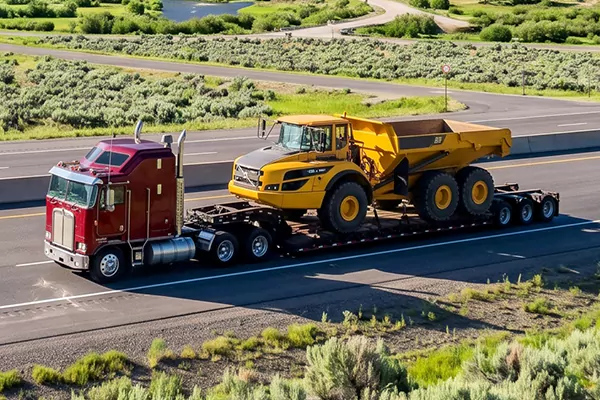
Flatbed RV transport keeps the RV off its own tires during the trip.
This method can protect wheel components from long-distance wear. It is also useful when the RV cannot safely travel on its own running gear.
The trade-off is price. Large transport equipment requires more fuel and carrier capacity.
A tall motorhome can also create route restrictions when placed on another trailer. Added deck height can change the total loaded height.
The final RV quote changes with physical dimensions and operating condition. Seasonal demand can also affect available capacity. Route restrictions may require added mileage or special equipment. Each change affects the amount of work needed to move the RV safely.
A longer RV uses more carrier space.
Travel trailers above standard dimensions can require specialized equipment. Exact length should include rear-mounted accessories when they remain attached.
Height matters when the RV rides on a flatbed.
Adding the trailer deck can make the loaded combination much taller than the RV itself.
This can change route planning. It can also limit the bridges available along the trip.
A heavy Class A requires greater towing capacity.
Weight can also affect which trailer type can legally carry the RV.
Use the actual vehicle weight when available. Do not rely only on a brochure estimate when the RV carries permanent modifications.
A road-ready RV gives the transporter more options.
A damaged motorhome can require a flatbed even when drive-away would normally cost less.
A travel trailer with bad tires creates a similar issue. Tow-away transport becomes risky when the tires cannot support highway travel.
Urgent transport can cost more because fewer trucks are available.
A broader pickup period gives dispatch more chances to match the RV with a suitable route.
Booking several weeks before the desired move can improve flexibility.
You can estimate RV shipping by multiplying the highway distance by a realistic 2026 rate. Start with $1.50 to $4.00 per mile for broad planning. Then adjust your expectation for RV class and transport method before comparing the result with written estimates.
Use this process:
For example, a 1,000-mile shipment at $2 per mile gives a $2,000 planning figure.
The same distance at $3.50 per mile gives $3,500.
Those two numbers can both be reasonable when one shipment involves a travel trailer and the other involves a large motorhome.
The cost to transport RV units should never be calculated from length alone. Weight can change the equipment requirement.
A RV shipping cost estimate should also state whether the RV will be driven or carried. That difference can change the final price significantly.
The insider tip is to calculate a low and high figure before requesting estimates. A quote outside that window deserves an explanation rather than automatic rejection.
A risky RV quote may omit the transport method or use dimensions that do not match the vehicle. Federal operating authority should also be checked for interstate for-hire transportation. The arriving carrier should match the legal business named in the transport paperwork.
Check these warning signs:
FMCSA states that for-hire interstate carriers transporting regulated property generally need operating authority in addition to a USDOT number. Brokers arranging interstate property transportation also fall under federal authority requirements.
Cargo carried on a commercial vehicle must also be firmly immobilized or secured. FMCSA requires adequate tiedowns or other restraint systems.
You can improve an RV estimate by measuring the vehicle before requesting pricing. Record its full length and height. Confirm its weight when possible. Check whether the RV can move safely on its own running gear. Accurate inputs reduce the chance of an equipment change later.
Use this checklist:
Include rooftop equipment in the height measurement. Air conditioners can affect total clearance.
Measure a travel trailer with the hitch included when the transporter requests overall length.
Note rear-mounted racks if they cannot be removed.
The most important check is road readiness. A tow-away estimate can become unusable when a tire problem prevents the RV from traveling safely.
Professional transport becomes useful when an RV is oversized or cannot move safely on its own running gear. It also matters when flatbed equipment is required. A transport specialist can determine trailer fit and identify route restrictions before the shipment begins.
Ask for professional review when the RV has structural damage.
A large Class A can also need equipment planning before a quote becomes final.
Request the legal carrier name before pickup. Verify interstate authority through FMCSA when applicable.
Ask how the RV will be secured if it rides on a commercial trailer. FMCSA cargo rules require securement systems capable of controlling cargo movement in interstate commerce.
Request the applicable insurance information before release. Read the damage claim process before signing the pickup paperwork.
Professional coordination does not replace your own inspection. Photograph the RV before transport and repeat the inspection at delivery.
You can control transport costs by booking early and providing accurate dimensions. Choose tow-away when the trailer is roadworthy. Avoid urgent pickup when your schedule is flexible. Correct vehicle information helps the shipment use the right equipment from the start and reduces price changes.
Prepare the RV before pickup:
Remove detachable exterior accessories when practical. Added width can affect equipment selection.
Keep the unit accessible for pickup. A carrier may need more room than a passenger vehicle.
Do not request a flatbed solely to avoid adding mileage unless the added cost fits your budget. The difference can reach thousands of dollars on a long route.
Book outside urgent timeframes when possible. More scheduling flexibility can increase the number of suitable transport options.
RV transport cost commonly runs $1.50 to $4.00 per mile in 2026, with many shipments totaling $1,000 to $5,000 or more. RV size and transport method create the biggest price differences. Measure the unit before requesting estimates and verify interstate carrier authority when applicable. If specialized equipment is required, professional review can clarify the safest method before pickup.
7-Aug-26 4 min. read
RV transport cost ranges from $1.50 to $4 per mile in 2026. Compare RV types, tow-away, drive-away and flatbed rates, distance, equipment, and fees.
Read our cost guideNeed Help?
One call solves it all.